 |
TRIBUTES |
• From Manuel Gayol Mecías: Aurelio de la Vega: Centennial of a Universal Legacy • Por Manuel Gayol Mecías: Aurelio de la Vega: Centenario de un legado universal • From From Yalil Guerra: Dear teacher and friend • Por Yalil Guerra: Querido maestro y amigo • From Enrico Santí: A MEMORY IN MUSIC (Read at Wende Museum, Los Angeles, February 1, 2026) • Por Yalil Guerra: Celebración del centenario del compositor Aurelio de la Vega • From Angel Marerro: AUREOUS LULLUS: VEGA — MEADOWS — NODES, NOTES — LOGOS MNEMOSYNE • Por Angel Marerro: ÁUREO LULLUS: VEGAS, NODOS, NOTAS — LOGOS MNEMOSYNE
From Manuel Gayol Mecías, Cuban writer, journalist and director and editor of Palabra Abierta.
Aurelio de la Vega: Centennial of a Universal Legacy
The work of Aurelio de la Vega stands as one of the most significant pillars of contemporary classical music on the international stage. His creative genius, deeply rooted in the Hispanic cultural tradition, projected Cuba’s voice onto the most prestigious venues worldwide, raising his homeland’s concert music to a level of excellence and universal recognition. At the same time, Aurelio ensured that his compositions became organically integrated into the cultural life of the United States, serving as a resonant bridge between two worlds. His works not only enriched the academic and artistic repertoire of North America but also offered an extraordinary musical reservoir that reflects the diversity and strength of the human experience. To celebrate his centennial is to honor a creator who, with rigor and passion, united roots and horizons. Aurelio de la Vega remains a symbol of cultural union and a testimony that music, in its highest expression, has the power to transcend borders and time.
Personal note
On this centennial of Aurelio de la Vega, I want you to express my gratitude and admiration for his legacy. His music not only reminds us of Cuba’s greatness, but also of the strength of a spirit that transcended borders and time. For me, Aurelio was always a symbol of dignity and tireless creation. His work invites us to listen with our hearts and to recognize that culture is a bridge that unites peoples. With affection and respect, I join this celebration, convinced that his musical voice will continue to inspire future generations.
Por Manuel Gayol Mecías, el director y editor de Palabra Abierta. Escritor y periodista cubano.
La obra de Aurelio de la Vega constituye uno de los pilares más significativos de la música clásica contemporánea en el ámbito internacional. Su genio creativo, profundamente arraigado en la tradición cultural hispana, supo proyectar la voz de Cuba hacia los escenarios más prestigiosos del mundo, elevando la música de concierto de su patria a un nivel de excelencia y reconocimiento universal. Al mismo tiempo, Aurelio logró que sus composiciones se integraran de manera orgánica en la vida cultural de los Estados Unidos, convirtiéndose en un puente sonoro entre dos mundos. Sus obras no solo enriquecieron el repertorio académico y artístico norteamericano, sino que también ofrecieron un extraordinario reservorio musical que refleja la diversidad y la fuerza de la experiencia humana. Celebrar su centenario es rendir homenaje a un creador que, con rigor y pasión, supo conjugar raíces y horizontes. Aurelio de la Vega permanece como símbolo de la unión entre culturas y como testimonio de que la música, en su más alta expresión, es capaz de trascender fronteras y tiempos.
Nota personal
En este centenario de Aurelio de la Vega, quiero expresarte mi gratitud y admiración por su legado. Su música no solo nos recuerda la grandeza de Cuba, sino también la fuerza de un espíritu que supo trascender fronteras y tiempos. Para mí, Aurelio fue siempre un símbolo de dignidad y de creación incansable. Su obra nos invita a escuchar con el corazón y a reconocer que la cultura es un puente que une a los pueblos. Con afecto y respeto, me uno a esta celebración, convencido de que su voz musical seguirá iluminando generaciones futuras.
From Yalil Guerra, Ph.D., composer, conductor, classical guitarist, founder/director of the GSO-Guerra String Orchestra.
Dear teacher and friend: Having known you and having had the privilege of being your student for fourteen years irrevocably shaped the path toward a childhood dream: becoming a composer. You contributed in a unique and decisive way to making that dream a reality, and that gift is beyond measure. I carry you with me always; you accompany me in every note and every cadence I write. Your teaching lives on in my music and in the way I understand art. With deep gratitude and admiration.
Por Yalil Guerra, Ph.D., compositor, director de orquesta, guitarrista clásico y fundador/director de la Orquesta de Cuerdas GSO-Guerra.
Querido maestro y amigo: Haberlo conocido y haber tenido el privilegio de ser su alumno durante catorce años marcó de manera irremediable el camino hacia un sueño de infancia: ser compositor. Usted contribuyó de una forma única y decisiva a que ese sueño se hiciera realidad, y ese legado no tiene precio. Lo llevo siempre muy presente; me acompaña en cada nota, en cada cadencia que escribo. Su enseñanza vive en mi música y en mi manera de entender el arte. Con profunda gratitud y admiración.
From Enrico Mario Santí, Ph.D., writer, educator, poet, sculptor.
A MEMORY IN MUSIC
(Read at Wende Museum, Los Angeles, February 1, 2026) Good afternoon, ladies and gentlemen, and welcome to today’s concert. My name is Enrico Santí and, in case you’re wondering, I am not the Museum Director. I’m not a musician, a singer, or even a musicologist. I´m just a friend, a fan of Maestro Aurelio de la Vega´s music, and as a friend who once wrote a book with him, I´ve been asked to say a few words before the performance. But since I lack the professional credentials that could guarantee a musically correct introduction, I have opted instead to stick to my personal link to the Maestro and do something different. I have him written a letter. Not an email, not a text. A letter, Old School. It goes like this. Dear Aurelio, It’s going to be four years at the end of next month since we’ve spoken, and I don’t have to say to you that all this time I’ve missed you. I’ve missed sharing with you all the news coming out of Cuba, and all the gossip out of the L.A. music world. But above all I´ve missed those cherished moments of brotherly love by way of your seemingly endless array of delicious dirty jokes… Today I´m writing to you from the Wende Museum, one of the coolest institutions in the West side. And surprise! In honor of your centennial celebration, the folks here have put together an amazing concert of select chamber music written by you over half a century, six pieces ranging from your early Cuban works from the 40’s and 50’s, through those radical, experimental pieces you wrote during the 70’s in Northridge, and ending with that stunning 1995 song cycle Canciones transparentes, based on poems by José Martí, Cuba’s national hero. In fact, you’ll be pleased to hear that the concert program begins and ends with song cycles based on poems, and not just with the strong mark of Cuba. La Fuente infinita was your first of many of those song cycles, written in Havana when you were only nineteen and based on three poems by José Francisco Zamora. But here’s something I never got to ask you: what is it with you and poetry? In your canon I see at least ten vocal works that use poems by other hands, and a couple, like the 1976 Inflorescencia, in today’s program, that even use poems written by you. You weren’t just a composer, right? You wrote music AND poetry. Guess that makes you a little bit like Frank Sinatra, who used to go: “You’d never know it/but buddy, am a kind of poet”? And I guess that, like “old blue eyes”, you too had “a lot of things you’d like to say”. Just like it’s not widely known that you were a writer, I don’t rightly know that folks are aware of many important details about your biography, or your music’s connection with your life, the kind that that might help situate today’s concert, for example. I’m pretty certain they do know about the basic stuff: that you left-- more likely, escaped—Cuba in 1959 fleeing the communists, that your settled at CSUN and rose through the ranks to become Distinguished Professor, that over the course of a fifty-year career you garnered many awards for your music and your teaching. All of that is well known. But I don’t think they know the more secret, more internal story that you once told me and that may cast a light on today´s program. I am aware of course of the official bio in your website, put together by you, where you cite Gilbert Chase when he points out the three stylistic periods in your work: 1944-1957, apprentice years in Havana; 1957-1970, beginning with your 12-tone String Quartet, through the serialist and aleatory works of the 1970’s; and the third, mature period, 1970 onwards, of major orchestral works that ends with your last years. But today I’m not referring to that official biography, or autobiography, that is available for public consumption. I mean the other bio you shared with me, and most people don’t know about, and that I think is important enough to remind you and your friends about. So, correct me if I’m wrong. You were 34 when you left Cuba, leaving behind family, wealth, and a score of achievements, including a job as dean of a music school. You arrived in L.A. with nothing, mourning the loss of both past life and motherland. You also knew you couldn’t, and wouldn’t, go back. The effect that double loss had-- you told me-- was profound—in order to settle down and face the future, you had to start from scratch. Put Cuba behind you, done-for, laid to rest. Your new American life, in turn, took your music in new directions: minor pieces and chromaticism gave way to 12-tone and serialization, e-music, open, aleatory forms. The change lasted a good 15-20 years. But then a gradual shift began to take place. Like an old love, Cuba came back, or rather you went back to her, not in body but in spirit. A spiritual return. Your music changed again and major works succeeded one after the other. Out of principle, you had always rejected folklore and nationalism as the basis for composition, a quarrel that had first set you apart from mainstream Cuban classical music and earned you then, an early 12-tone champion , the dubious label of “crypto German”. But then, swept by this latest turn, you began asking yourself, among other technical issues, what if less obvious, and yet more basic, features of Cuban music, like rhythmic cells, could be used in subliminal, structurally subtle ways? In your first works you had used those same cells, rather obviously. But now you returned to them in more conscious, creative ways. That’s why vocal works like Magias e invenciones, Testimonial, Madrigales de entonces, or Recordatio, all based, by the way, on works by Cuban poets, emerge steadily during the 80´s and 90´s, culminating perhaps with Canciones transparentes. And that’s also why major orchestral works of this last stage, like Variación del Recuerdo or Adiós, take up fully the themes of nostalgia and national culture. So I gotta ask you: applying what you once shared with me, did you, Aurelio, channel today´s program by choosing two works from your first Cuban period, two from that middle experimental (but also mourning) stage, and two more from your mature latter-day shift? If you did channel the program, that´s quite a spiritual return! I guess there is, after all, and despite all formalist claims, something to be said about the links between life and art, or else, as in your case, between your biography and your music. My teacher, the poet Octavio Paz, used to say, when broaching that very topic, that poets have no biography: their work is their biography. I suppose one could say the same about you. By which I mean: let’s forget everything I’ve said, or reminded you about, in this letter: deep down, your biography, everyone’s biography, is a fiction, an illusion, a fleeting memory. The real, and only, biography that counts is your works, your music. Your music, in turn, records a memory, a memory we can hear not in English, not in Spanish, not even in Cuban, but in a far subtler and more widely available language: the language of music. In closing, let me say this. Maestro, when you left us, four years ago almost to the day, we were bereft of your physical presence. Left instead with one overwhelming reality: the reality of silence. I doubt that I’ll be around for your next centennial celebration. I’ve no doubt, though, that your music will. Meantime, I want you to know that today, in celebration of your would-be 100th year, we remember you through that same music. And like always, we can’t wait to hear… you. Your friend, Enrico Mario Santí
Celebración del centenario del compositor Aurelio de la Vega
El programa reunió una cuidada selección de obras vocales e instrumentales que ilustran diversos períodos creativos del compositor
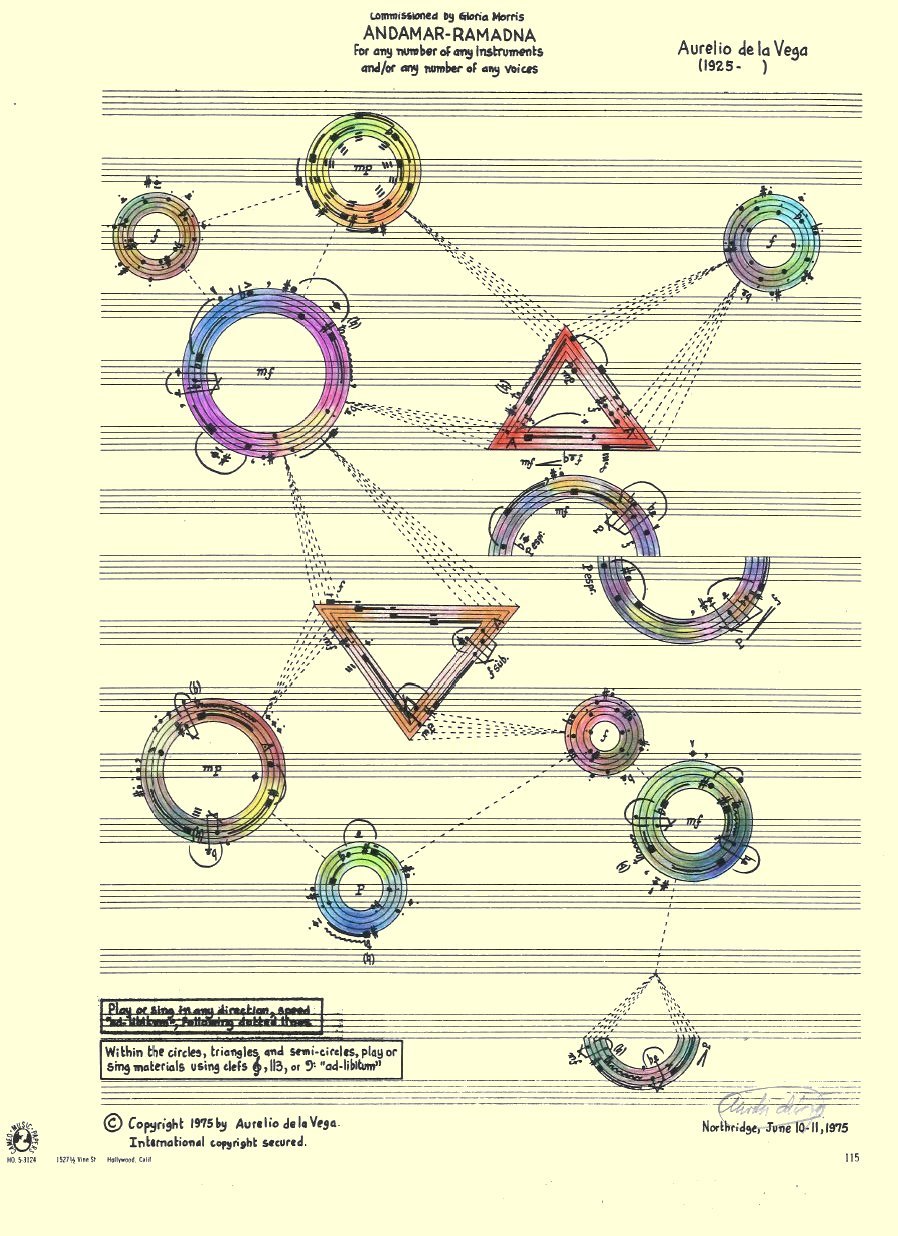
El pasado 1 de febrero de 2026, la ciudad de Los Ángeles se convirtió en punto de confluencia para la memoria, la música y la gratitud. Allí tuvo lugar un concierto de especial envergadura artística y simbólica, dedicado a celebrar el centenario del nacimiento del compositor cubano-americano Aurelio de la Vega, figura cardinal de la creación musical contemporánea y uno de los intelectuales más lúcidos que ha dado la diáspora cubana. Este homenaje formó parte de un ciclo internacional de conciertos concebido para recorrer distintas ciudades del mundo, subrayando la dimensión universal de una obra que, aun arraigada en una identidad profundamente cubana, dialoga con los lenguajes estéticos más rigurosos del siglo XX y comienzos del XXI. Lejos de una celebración meramente conmemorativa, la velada propuso una escucha activa y reflexiva de un catálogo vasto, exigente y coherente, cuya vigencia permanece intacta. El programa reunió una cuidada selección de obras vocales e instrumentales que ilustran diversos períodos creativos del compositor. Piezas como La fuente infinita, Inflorescencia, Canciones transparentes, Leyenda del Ariel Criollo, Biflorero y Andamar Ramadna permitieron apreciar la amplitud de su pensamiento musical: desde la densidad estructural heredera de las vanguardias europeas, hasta una poética sonora donde la memoria, el mito y la abstracción conviven sin concesiones. Cada obra confirmó el rigor intelectual que caracteriza a de la Vega, así como su capacidad para convertir la música en un espacio de reflexión ética y estética. Uno de los elementos más conmovedores de la noche fue la participación de la cantante y directora coral Anne Marie Ketchum de la Vega, viuda del compositor y colaboradora esencial en el desarrollo de su legado vocal. A lo largo de décadas, ella fue intérprete y defensora de gran parte de su repertorio, y en esta ocasión asumió el rol de mediadora entre la obra y el público. Sus presentaciones, cargadas de cercanía y emoción contenida, aportaron un contexto humano que enriqueció la experiencia auditiva sin restar protagonismo a la música. Antes de que sonara la primera nota, el concierto fue precedido por la lectura de una carta dedicada al maestro, a cargo del escritor, ensayista y pedagogo cubano Enrico Santi. El texto, de profunda resonancia poética, funcionó como un umbral simbólico: una invitación a ingresar en el universo intelectual y espiritual de un creador cuya vida estuvo marcada por la reflexión constante, el exilio y la fidelidad absoluta a sus principios artísticos. Al éxito artístico de la velada contribuyó de manera decisiva un elenco de intérpretes de altísimo nivel, cuya solvencia técnica y sensibilidad musical estuvieron siempre al servicio de la obra. Participaron las sopranos Shana Blake Hill, Tiffany Ho y Anne Marie Ketchum de la Vega, cuyas voces —diversas en timbre y carácter— supieron articular con claridad y profundidad la exigente escritura vocal de Aurelio de la Vega. En el plano instrumental, la pianista Wendy Prober ofreció una lectura de gran precisión y lirismo; el clarinetista Micah Wright aportó una sonoridad refinada y control expresivo; la violonchelista Masiel Medina destacó por la hondura de su fraseo, cálido sonido y su comprensión estructural de las obras; y el guitarrista Brady Davis completó el conjunto con una interpretación de notable rigor y musicalidad. En su conjunto, estos intérpretes confirmaron que la música de de la Vega encuentra hoy voces y manos plenamente capacitadas para sostener su complejidad y transmitir su intensa carga expresiva al público contemporáneo. Celebrar el centenario de Aurelio de la Vega no es únicamente rendir tributo a un compositor excepcional; es también reafirmar la importancia del pensamiento crítico, del rigor intelectual y del compromiso ético en el arte. En un tiempo de tantos conflictos, su música continúa exigiendo atención, silencio y profundidad. Y quizás por ello, más que un acto de recuerdo, el concierto del pasado 1 de febrero fue una confirmación: la obra de Aurelio de la Vega sigue hablando con fuerza al presente y reclamando su lugar indispensable en la historia musical de nuestro tiempo. La celebración no concluye aquí. Otros conciertos tendrán lugar en distintas ciudades de Estados Unidos y en diversos escenarios del mundo, prolongando este gesto colectivo de memoria, escucha y gratitud. Cada nueva interpretación será una manera distinta de volver a dialogar con la obra y el pensamiento de Aurelio de la Vega, cuya música continúa trazando puentes entre el rigor intelectual y la emoción más profunda. Yalil Guerra
From Ángel R. Marrero, artist, graphic designer, independent researcher on symbology.
AUREOUS LULLUS: VEGA — MEADOWS — NODES, NOTES — LOGOS MNEMOSYNE
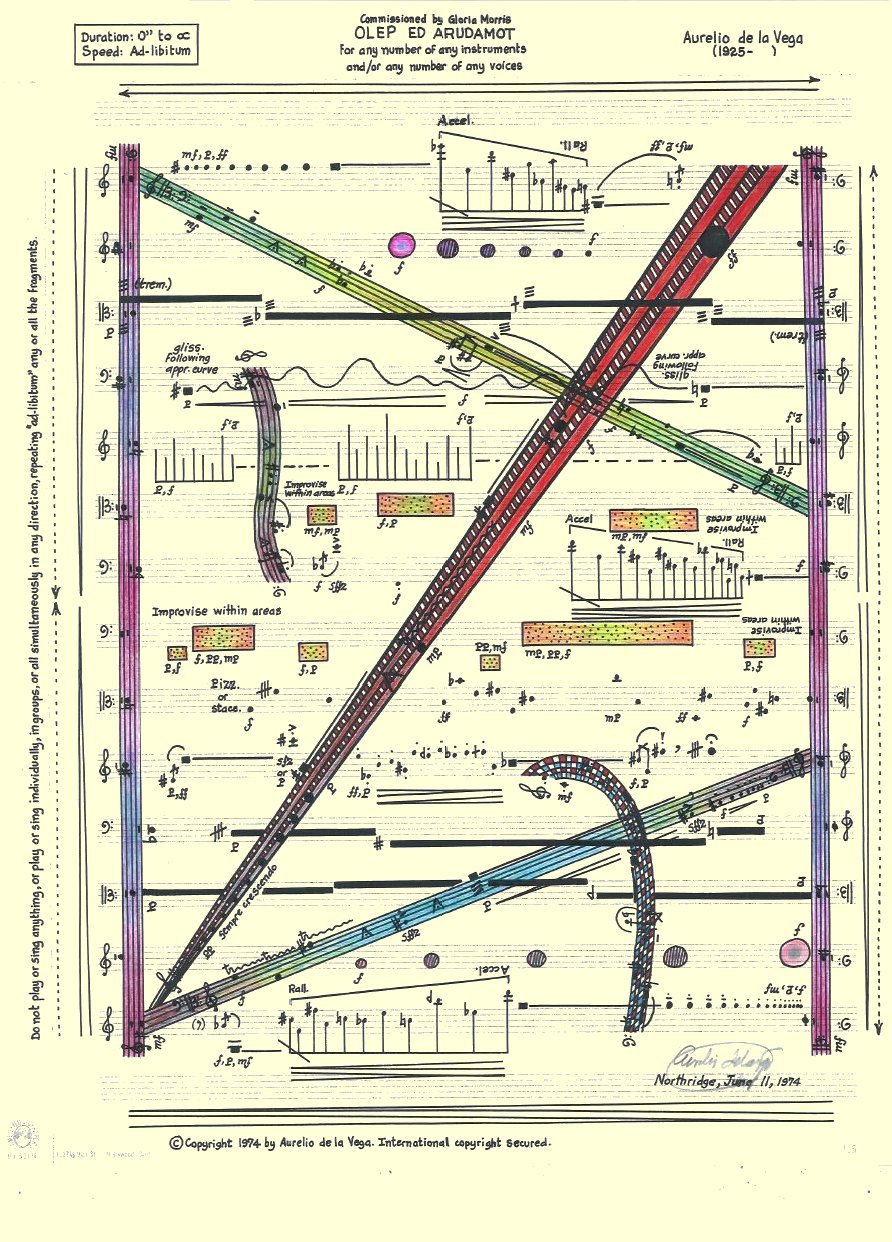
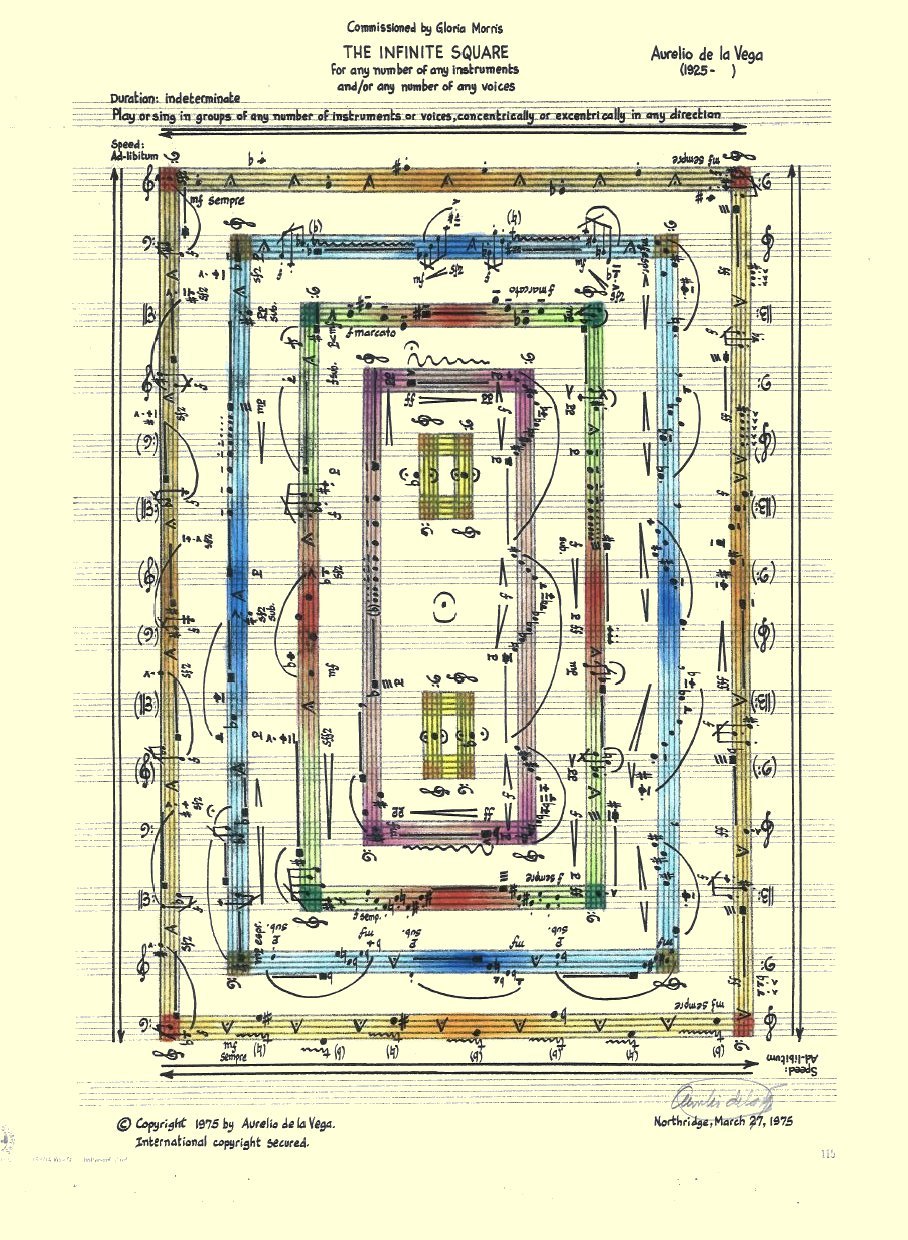
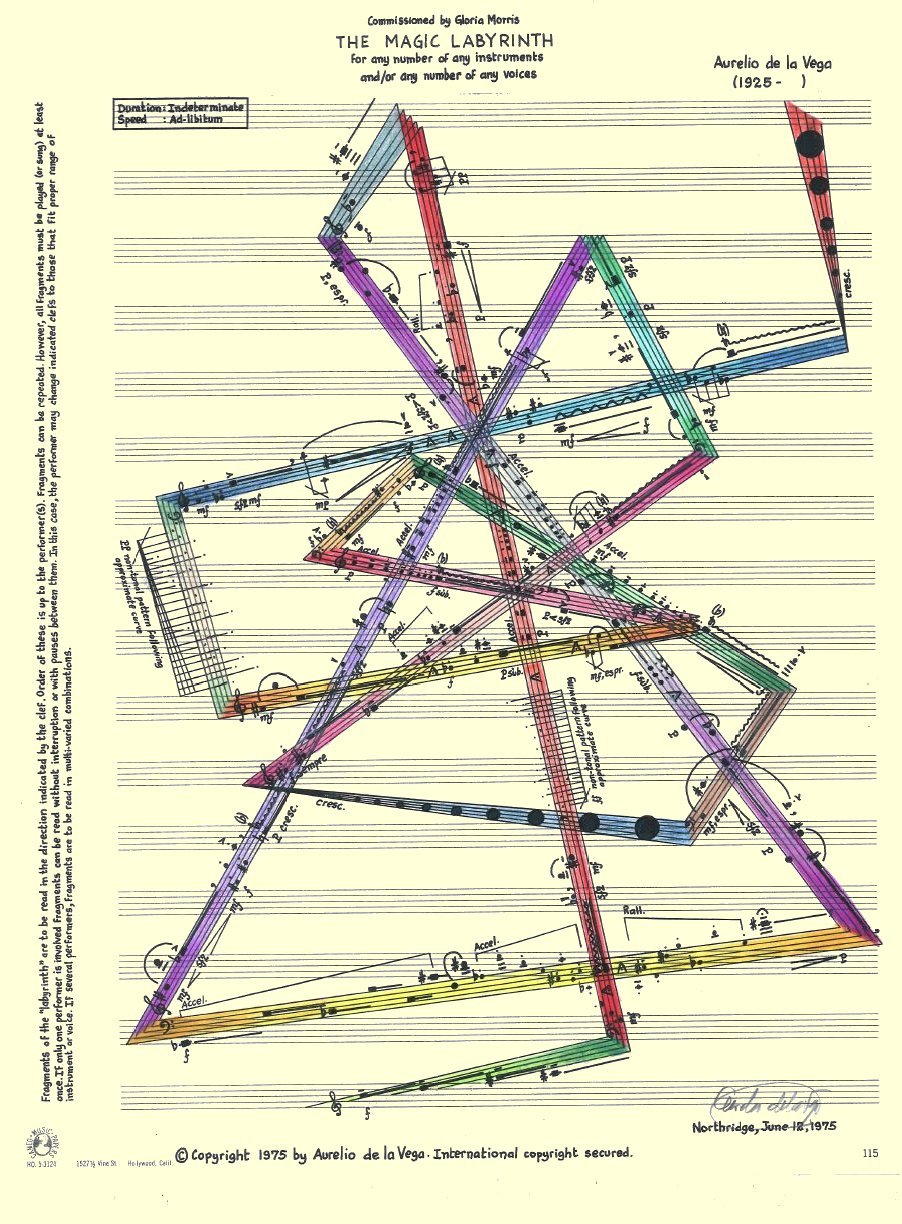
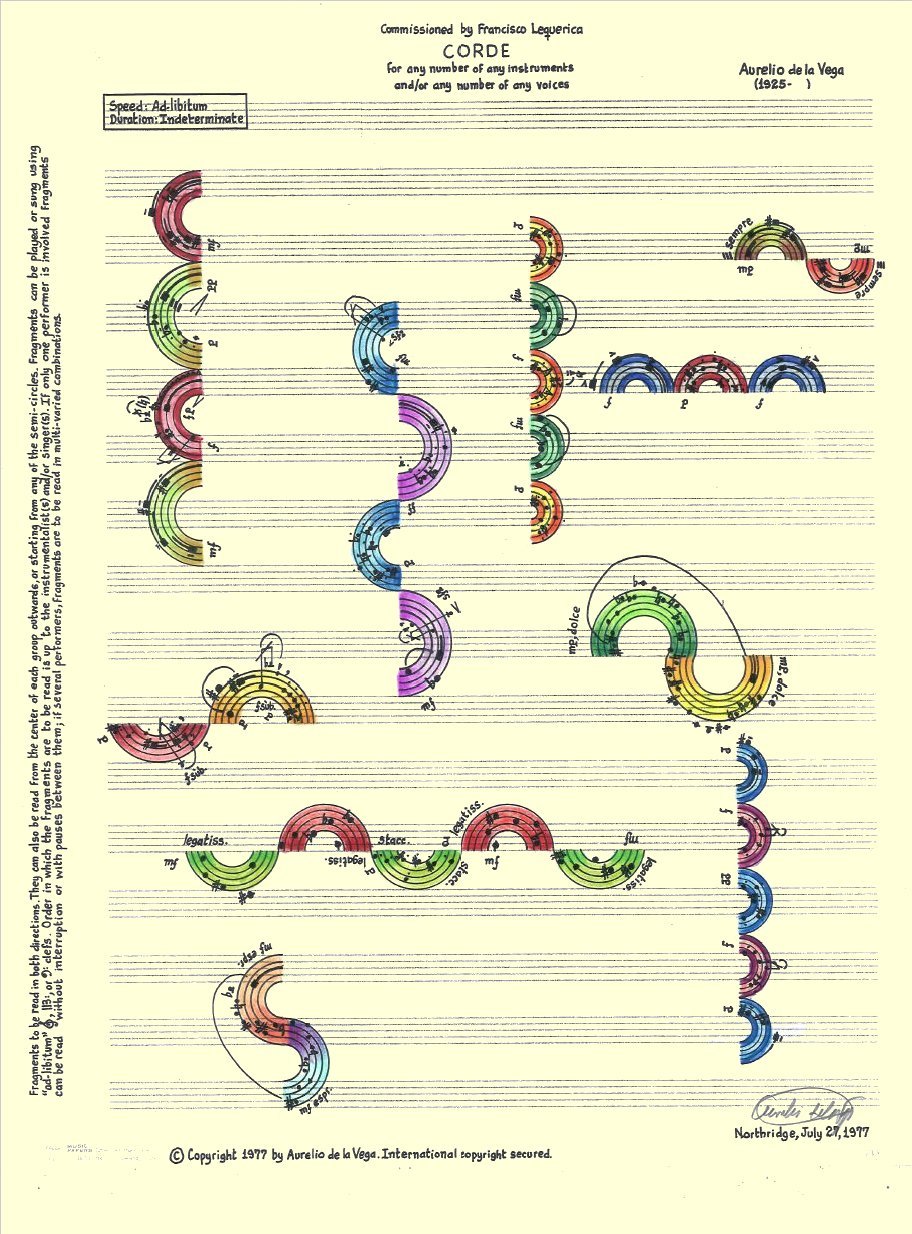
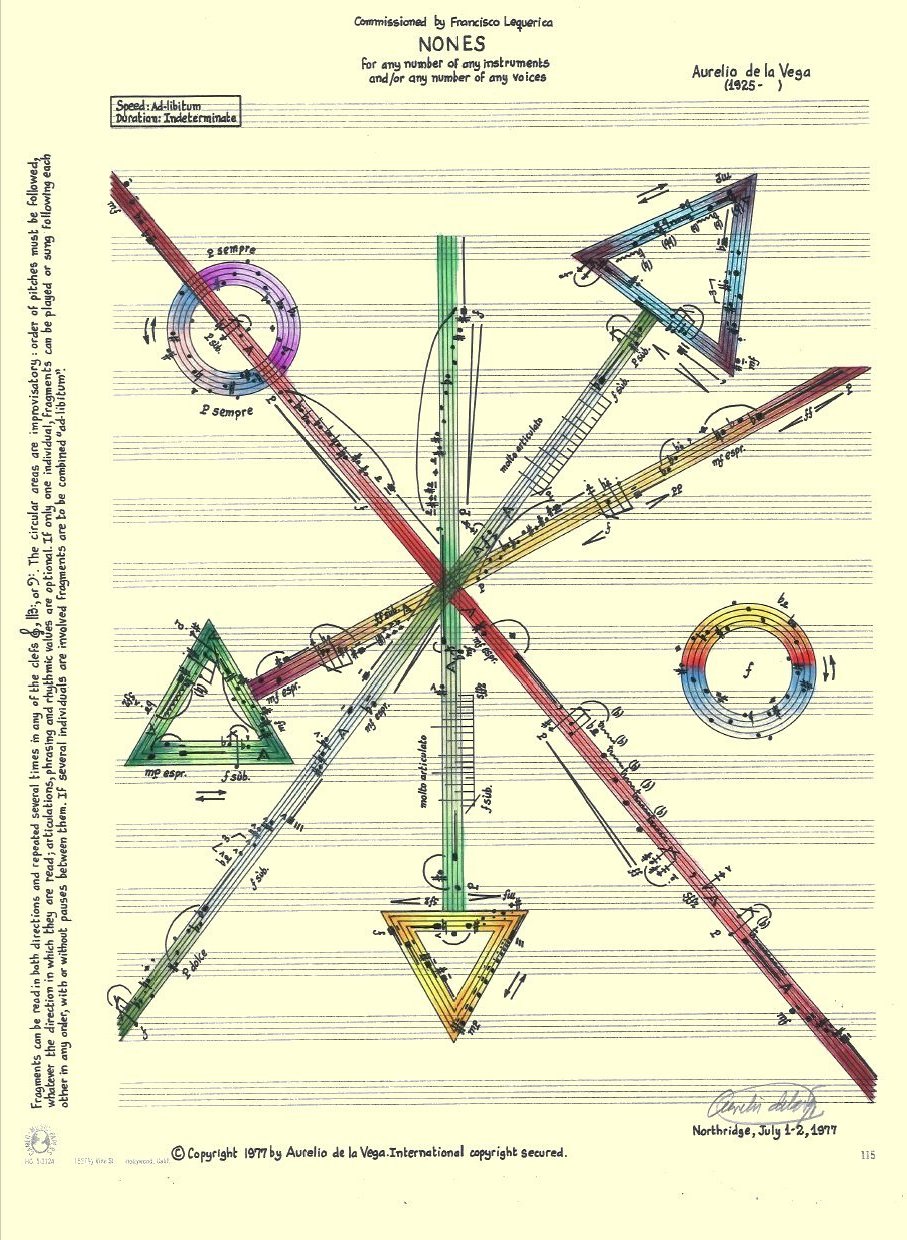
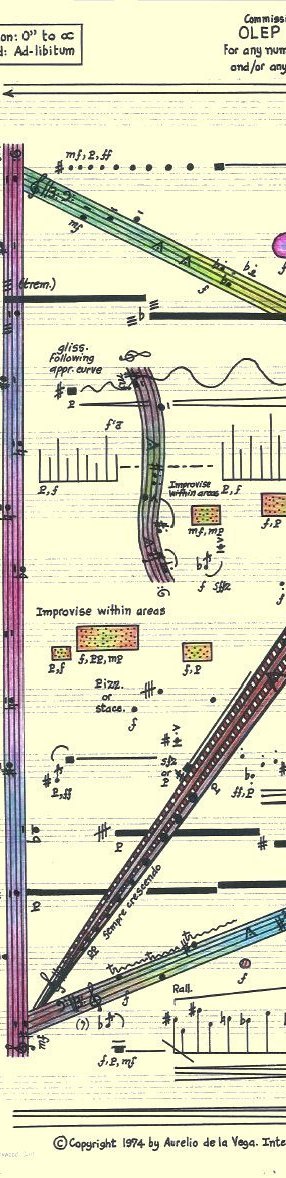
“In the beginning was sound; it was rhythm.” — Marius Schneider, El origen musical de los animales-símbolos en la mitología y la escultura antiguas (1946) “…the true nature of sound… is still enveloped in the deepest obscurity.” — Ernest Chladni, Die Akustik (Acoustics, 1802) “Words that carried a song within their depths, for they were born in the rhythmic palpitation of the Universe.” — Joan Maragall, "Elogi de la paraula" ["Praise of the Word"] (1903)Every work of art, like the night, encloses a fascinating mystery: the search for a secret illumination by which the artist — in this case, the composer — traces structures that we first inhabit and that later come to inhabit us. This relation manifests itself when the artist opens himself to what the Greeks called the Moûsai, the Muses, daughters of the celestial sovereign Zeus and of Mnemosyne, Mnemosyne, terrestrial memory. It is within that liminal interstice — the space between the immanent and the transcendent — that the artist intuits, rather than seeks, his immortality. The avant-gardes did not abandon, despite their ruptures, their relation to the sacred. An exhibition at the Centre Pompidou, Traces du Sacré (Traces of the Sacred, 2008), proposed a reading of artistic modernity through the persistence of the sacred, tracing an arc that reopened even axes of medieval thought. Traces of the Sacred became a fundamental point of reference for analyzing the endurance of metaphysical concerns within the avant-garde: even when irony or rejection seemed to distance them, such gestures, in their very distancing, brought them closer.It thus unfolded a spectrum of axial tensions ranging from devotion to blasphemy, whose lines may be traced within the classical avant-gardes — from Kazimir Malevich to Marcel Duchamp, passing through Pablo Picasso — and continued through spiritual non-figuration, from Mark Rothko to Barnett Newman and Hilma af Klint, later extending into contemporary art, from Bill Viola to Maurizio Cattelan, without forgetting the indispensable Joseph Beuys. All of this was contextualized by medieval works, including Gothic reliquaries, liturgical metalwork, and icons from the Andrei Rublev Museum, alongside a significant presence of the figures of the Ars Magna of Raimundus Lullus. It is this referential framework that allows us to situate the graphic scores of Aurelio de la Vega within that wide spectrum of the sacred, most especially in relation to the Ars Magna of Raimundus Lullus, as a fitting homage on the centenary of his birth. For between the composer’s graphic scores and the ars combinatoria of Gottfried Wilhelm Leibniz — which takes up again the Ars Magna of Lullus — one discerns a structure of nodes that, despite the historical distance, preserves an axial relation: a radius, a vector that binds notes to geometric figures, forming an intricate quipu that links the avant-garde to the deep Middle Ages and allows a glimpse of the veil — imperceptible yet persistent — that envelops the sacred within the geometric, within number, within music. Increasingly evident to us becomes the relation between number and form, structure and the language of the world. Geometry — that primal form of music — which, in Vitruvius’ telling, Aristippus beheld with hope, shipwrecked upon the shore; the very one whom Steiner described, astonished, persistently tracing geometric figures again and again upon the sand, erased and cyclically licked away by the waves. And thus, lest the world be forgotten: geometry — music — set against the erosion of oblivion: barbarism. It is precisely that image of the castaway that reveals itself before the graphic scores of the aureous composer and geometer — if the distinction may still be made for the two are one. It is as though, from within the music, the Muse were to emerge; the Moûsa at the heart of mousikē: Euterpe — musical, pleasurable, delight-bearing — breathed into being by the astral Urania. It is in this instant, when time fragments into nodes, into notes, that we are able to perceive, within the geometric forms of the composer’s graphic scores, a true ars combinatoria revealing a connection with the work and sensibility of one who may be regarded as a foundational thinker of the Middle Ages: Raimundus Lullus. His logical and combinatorial method, his Ars Magna, constitutes an integrative vision of science, mysticism, and mission that has since projected its influence across the Western intellectual tradition. One might sustain, with genuine paradox, that the work of Aurelio de la Vega — who was briefly a student of Arnold Schoenberg and who, despite a difficult relationship with the legendary composer, remembered him as the idol of his youth, as noted by Enrico Mario Santí (The Other Time: Aurelio de la Vega and Music, 2021, Editorial Aduana Vieja, p. 45) — whose graphic scores secretly dialogue with Lullian architecture, did not appear in the exhibition Thinking Machines. Ramon Llull and the ars combinatoria (EPFL ArtLab, 2018–2019). And yet works by his teacher Schoenberg were indeed present, as were those of the Catalan composer Josep Maria Mestres Quadreny, whose exploration of the musical within the graphic proves contiguous — though from another sensibility — with that of the exiled composer. This absence is not a mere curatorial omission: it is a wound in the cartography of combinatory thought. A silent wound, scarcely perceived, that leaves outside one of the voices who — from the imaginary of Cuban modernity in exile — knew how to weave together sound, abstraction, and geometry with radical autonomy. Geometric figures — like those of Aristippus upon the shore — were, for both Lullus and de la Vega, nodes: modes of connection with the divine, a persistent prayer inscribed in geometric glyphs. Knots of the quipu, an extended and sustained supplication, the dialogue of man with the invisible unfolding across history. Man, castaway before the profound mystery of the immeasurable. The avant-gardes — within which Aurelio de la Vega occupies a prominent place in his early and resolute rebellion — as Traces of the Sacred demonstrated so eloquently, could not evade the tragic and wondrous destiny of man before the mystery. And, despite the inclemencies of the digital now, beyond the mystery of the dark liquid-crystal screen, there is revealed to us once more — within the numeral — the mysterial: the cipher of the abyss of relation. Then music reappears: that abstract and universal language, that other geometry which inscribed for Western and universal memory — in the wind amid de la Vega’s own meadows — those fertile plains of memory — amid the turning of leaves — a lyrical lea of scores beneath the aureous sun — the quipu — Mnemosyne — of man. Knotted geometries: music and emblems that, as in the caves, were drawn for the nocturnal heavens — upon the rock faces — as geometric petroglyphs; the contoured, angular forms themselves intricate theorems, as in Lullus and in Aristippus: sign of plea, fixed glyphic memory, remembrance of the eternal in forms — in the symbolically seven scores* of Aurelio de la Vega before the unfathomable heavens:
Ángel R. Marrero, artista e investigador independiente de simbología.
ÁUREO LULLUS: VEGAS, NODOS, NOTAS — LOGOS MNEMOSYNE
"En el origen era el sonido, era el ritmo." — Marius Schneider, El origen musical de los animales-símbolos en la mitología y la escultura antiguas (1946) "...la verdadera naturaleza del sonido... aún se halla envuelta en la más profunda oscuridad." — Ernest Chladni, Die Akustik (Tratado de acústica, 1802) "Palabras que traían un canto en sus entrañas, porque nacieron en la rítmica palpitación del Universo." — Joan Maragall, "Elogio de la palabra"
Toda obra artística, como la noche, encierra un misterio fascinante: la búsqueda de una iluminación secreta con la que el artista — en este caso, el compositor — traza estructuras que primero habitamos y que luego nos habitan. Esta relación se manifiesta cuando el artista se abre a lo que los griegos llamaron Moûsai, musas, entidades hijas del celestial soberano Zeus y Mnemósine, la terrenal memoria. Es en ese intersticio liminar —espacio entre lo inmanente y lo trascendente — donde el artista intuye, más que busca, su inmortalidad. Las vanguardias no abandonaron, a pesar de sus rupturas, su relación con lo sacro. Una exhibición en el Centro Pompidou, Traces du Sacré (Huellas de lo Sagrado, 2008), propuso una lectura de la modernidad artística desde la persistencia de lo sagrado, trazando un arco que reabre incluso ejes del pensamiento medieval. Huellas de lo Sagrado constituyó un referente fundamental para analizar la persistencia de las preocupaciones metafísicas en la vanguardia, aun cuando la ironía o el rechazo parecieran distanciarlas, las acercaban en su propio distanciamiento. Abrió así un abanico que iba de la devoción a la blasfemia, cuyos ejes podrían situarse en las vanguardias clásicas — desde Malevich hasta Duchamp, pasando por Picasso — y continuaban con la no figuración espiritual, de Mark Rothko a Barnett Newman y Hilma af Klint, extendiéndose luego hacia el arte contemporáneo, desde Bill Viola hasta Maurizio Cattelan, sin olvidar al indispensable Joseph Beuys. Todo ello contextualizado por piezas medievales que incluían relicarios góticos, objetos litúrgicos de metalistería e iconos procedentes del Museo Central de Cultura y Arte Ruso Antiguo Andrei Rublev, junto a una presencia significativa de las figuras del Ars Magna de Raimundus Lullus. Es este marco referencial el que nos permite insertar las partituras gráficas de Aurelio de la Vega dentro de ese amplio abanico de lo sagrado, muy especialmente en relación con el Ars Magna de Raimundus Lullus, como un merecido homenaje en este centenario de su natalicio. Pues entre las partituras gráficas del compositor y el ars combinatoria de Leibniz — que retoma el Ars Magna de Lullus — se advierte una estructura de nodos que, a pesar de la distancia histórica, mantiene una relación axial: un radio, un vector que une las notas con las figuras geométricas, creando un intricado quipu que enlaza la vanguardia con el medioevo profundo y deja entrever el velo — imperceptible y persistente — que envuelve lo sagrado en lo geométrico, en el número, en la música. Cada vez se nos hace más evidente la relación entre el número y la forma, la estructura, el lenguaje del mundo. La geometría — esa forma primera de la música — que, al decir de Vitruvio, vio esperanzado Aristipo, el náufrago en la playa; el mismo que Steiner describiera, asombrado, dibujando, persistente, las geométricas figuras una y otra vez sobre la arena, borradas y cíclicamente lamidas por las olas. Y así, no olvidar el mundo: la geometría — la música — contra la erosión del olvido: la barbarie. Es precisamente esa imagen del náufrago la que se revela ante las partituras gráficas del áureo compositor geómetra — valga la redundancia. Es como ver surgir, entre la música, la musa; la Moûsa, en el seno de la mousikē: Euterpe, musical, placentera, deleitante, soplada por la astral Urania. Es este instante en que el tiempo se fragmenta en nodos, en notas y nos permite constatar, en las formas geométricas de las partituras gráficas del compositor, una verdadera ars combinatoria reveladora de una conexión con la obra y la sensibilidad de quien puede ser considerado un pensador fundamental del medievo: Raimundus Lullus. Su método lógico y combinatorio, su Ars Magna, constituye una visión integradora de ciencia, mística y misión que, desde entonces, ha proyectado su influencia en la tradición intelectual occidental. Podría sostenerse, con verdadera paradoja, que la obra de Aurelio de la Vega — quien fue brevemente alumno de Arnold Schönberg y quien, a pesar de una relación difícil con el legendario compositor, lo recordaba como el ídolo de su juventud, tal como señala Enrico Mario Santí (El otro tiempo: Aurelio de la Vega y la música, 2021, Editorial Aduana Vieja, p. 45), cuyas partituras gráficas dialogan secretamente con la arquitectura luliana, no figurara en la exposición Thinking Machines. Ramon Llull and the ars combinatoria (EPFL ArtLab, 2018–2019; literalmente “Máquinas de pensar”). Y, sin embargo, sí estuvieron presentes obras de su maestro Schönberg, así como del compositor catalán Josep Maria Mestres Quadreny, cuya exploración de lo musical en lo gráfico resulta colindante — aunque desde otra sensibilidad — con la del compositor exiliado. Esta ausencia no es una mera omisión curatorial: es una herida en la cartografía del pensamiento combinatorio. Una herida silenciosa, apenas advertida, que deja fuera una de las voces que — desde el imaginario de la modernidad cubana en el exilio — supo entretejer sonido, abstracción y geometría con radical autonomía. Las figuras geométricas — como las de Aristipo en la playa — fueron, tanto para Lullus como para de la Vega, nodos: modos de conexión con lo divino, persistente oración en geométricos glifos. Nudos del quipu, extensa y sostenida plegaria, diálogo del hombre con lo invisible atravesando la historia. El hombre náufrago ante el profundo misterio de lo inconmensurable. Las vanguardias — en las que Aurelio de la Vega ocupa un lugar prominente en su temprana y decidida rebeldía — como mostró elocuentemente Huellas de lo Sagrado, no pudieron evadir el trágico y asombroso destino del hombre ante el misterio. Y, a pesar de las inclemencias del ahora digital, tras el misterio de la oscura pantalla de líquido cristal se nos revela, nuevamente, en el guarismo, lo mistérico: cifra del abismo relacional. Entonces reaparece la música: ese abstracto y universal lenguaje, esa otra geometría que cifró para la occidental y universal memoria — entre el sonoro batir de las hojas de la Vega bajo el áureo sol — el quipu — Mnemósine — del hombre. Anudadas geometrías: música y emblemas que, como en las cavernas, dibujaban para el inconmensurable cielo nocturno — sobre los peñones — geométricos petroglifos; intrincados teoremas las contornadas, las angulares formas, como en Lull y en Aristipo, señal de auxilio, glífica memoria fija, recuerdo de lo eterno en las formas — en las simbólicamente siete partituras* de Aurelio de la Vega ante el eterno cielo por Palacio: